The U.S. Mint has employees who are sculptor-engravers; however, the mint also uses the Artistic Infusion Program of independent artists on some occasions. The AIP is comprised of artists from various backgrounds with various special interests. The mint sculptor-engravers and AIP artists may on some occasions work together on a project.
How does the mint recruit artists for the Artistic Infusion Program?
The Mint is not currently recruiting new artists for the program; however, there is a “call for artists” page on the Mint’s website. According to the website, “Artist information is included in historical documents, Certificates of Authenticity, and promotional materials. In most cases, the artist’s initials appear on the final coins or medals, along with the initials of the mint medallic artist who sculpted the selected design. The program replaced an earlier Design Panel program in 2003.
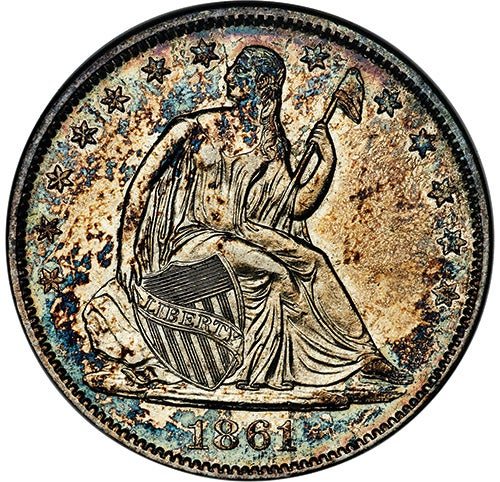
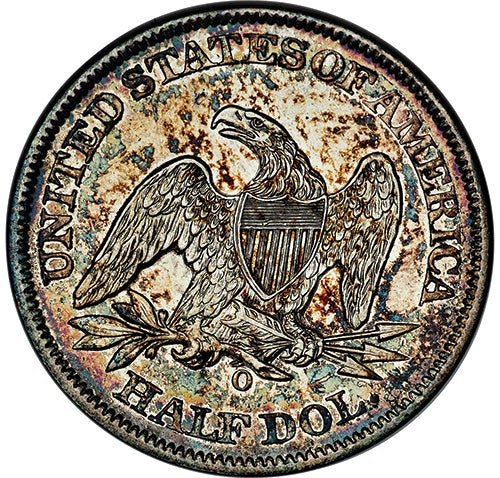
Is there really any difference between the Confederate and Federal 1861-O half dollar, or is it really all hype?
The Confederate 1861-O Seated Liberty half dollars were struck from the same dies as were the Federal issues, those dies having been seized by the Confederacy at the time the Confederacy took over the New Orleans Mint during the Civil War. Since the South was unable to obtain fresh dies, the so-called Confederate issues were struck with dies that were failing. Look for a die crack from the rim to the nose on Liberty and a bisected date/speared olive bud on half dollars recognized by collectors as having been struck by the Confederacy. In other words, Confederate coins are late die state issues.
The 1861-O half dollar was also struck by the state of Louisiana between when the Union and the Confederacy operated the mint. Is there a way to identify the state of Louisiana issues?
There isn’t room here to explain the differences fully, but be aware the 1861-O half dollar was struck using 14 different and distinct die pairs. These die pairings, or marriages, are described in detail by Randy Wiley in Issue 94 (March 2008) of the Gobrecht Journal. Some of these die pairings have been attributed to having been produced while Louisiana controlled the mint.
What is the Gobrecht Journal?
The Liberty Seated Collectors Club has been publishing the Gobrecht Journal three times a year since Fall 1974. The publication is research-oriented and addresses all coin denominations on which the 19th-century Seated Liberty design appears. The Seated Liberty design was initiated by U.S. Mint Chief Engraver Christian Gobrecht.
Was Gobrecht responsible for any other coin designs?
Gobrecht apprenticed as a watchmaker, learning engraving for ornamental clocks and watches simultaneously. He later engraved bank notes and dies, inventing the medal-ruling machine through which medals could be engraved. This led to Gobrecht being hired by the US Mint. His 1836 Flying Eagle dollar design would later be used as the model for Mint Chief Engraver James B. Longacre’s Flying Eagle cent. Gobrecht’s designs appeared on all US coins from half cents to eagles during his time at the mint. He died in 1844
E-mail inquiries only. Send to Giedroyc@Bright.net. Because of space limitations, we are unable to publish all questions.
Source: Numismatic News